Learning Outcome
By the end of this module, team members should understand how to recognise possible poisoning or exposure to toxic substances, what information to gather, what actions must be avoided, when veterinary advice is needed, and when Pad & Co procedures and incident reporting must be followed.
Training Information
Poisoning can happen when a dog eats, drinks, licks, inhales or comes into contact with something harmful.
Dogs may be exposed to toxic substances during walks, garden visits, home visits, sitting bookings or while travelling between bookings.
Suspected poisoning should be treated as urgent. Team members should not wait for symptoms to appear before seeking advice if there is reason to believe a dog has eaten or contacted something dangerous.
If poisoning is suspected, contact veterinary advice immediately and provide as much clear information as possible. Never try to make a dog vomit unless directly instructed by a veterinary professional.
Common Poisoning Risks
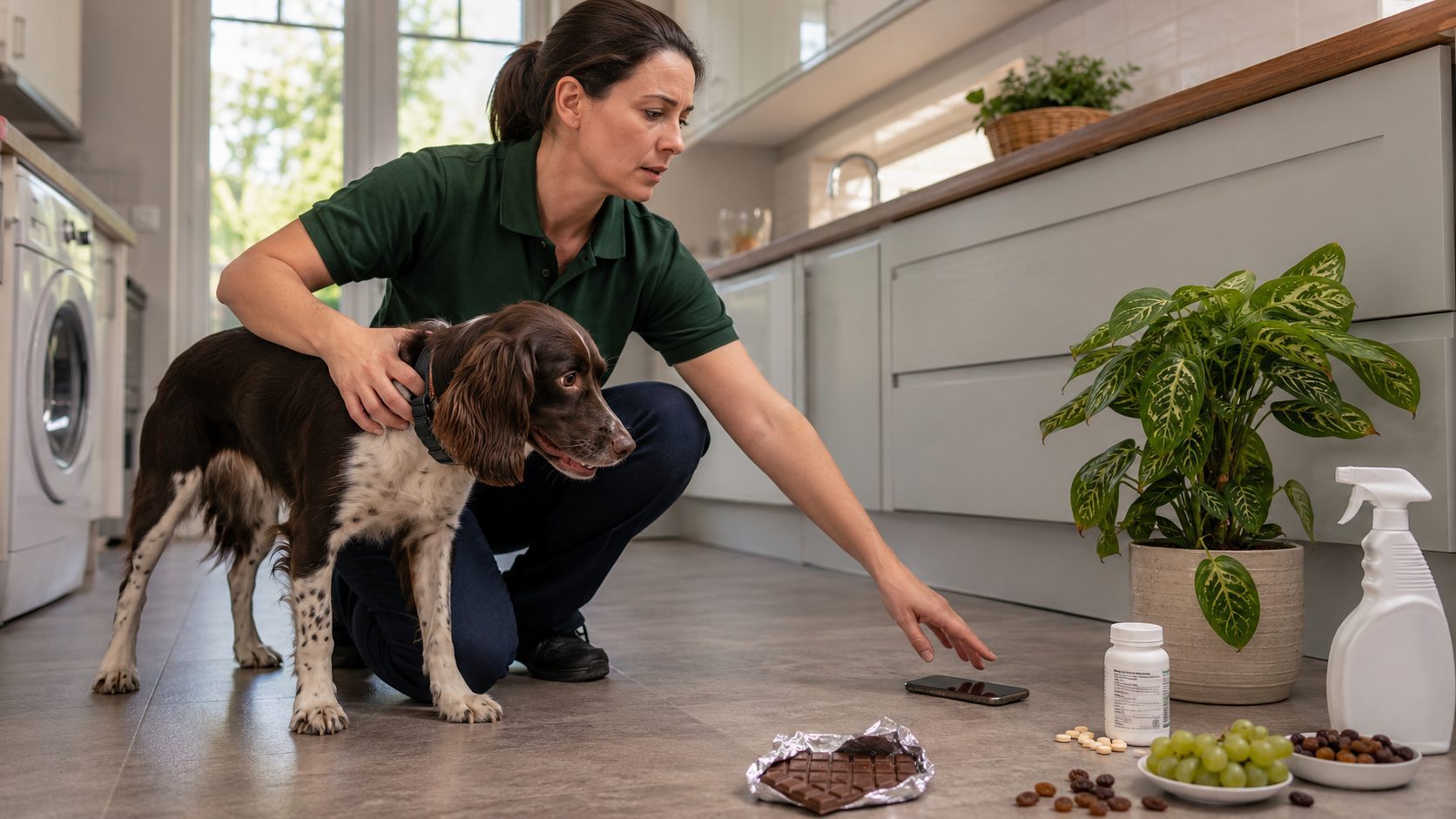
Possible risks include:
- Human medication
- Chocolate
- Grapes or raisins
- Xylitol
- Antifreeze
- Cleaning products
- Slug pellets
- Rat poison
- Garden chemicals
- Toxic plants
- Mouldy food
- Alcohol
- Caffeine
- Unknown food or waste
- Chemicals on paws or coat
Possible Signs of Poisoning
Possible signs may include:
- Vomiting
- Diarrhoea
- Drooling or foaming at the mouth
- Weakness
- Lethargy
- Wobbling
- Tremors
- Seizures
- Collapse
- Breathing difficulty
- Swelling
- Pale, blue or abnormal gums
- Sudden behaviour changes
Signs can vary depending on the substance. Some toxins cause symptoms quickly, while others may take longer to show.
What To Do
If poisoning or toxic exposure is suspected during a Pad & Co booking:
- Move the dog away from the substance if safe.
- Prevent further access.
- Keep yourself safe.
- Keep any packaging, label or container if available.
- Take a photo of the item, plant or substance if safe.
- Contact veterinary advice immediately.
- Contact Pad & Co management.
- Contact the client according to procedure.
- Record what happened clearly.
- Complete the incident form.
Information To Gather
When contacting veterinary advice, gather as much of the following as possible:
- What the dog may have eaten, drunk, licked or contacted
- How much may have been involved
- When it happened
- The dog’s size or approximate weight if known
- Any symptoms seen
- Packaging, label or product name
- Photos of plants, chemicals, food or medication where safe
Packaging or product information can help the vet understand what the dog may have been exposed to and how serious the risk may be.
What Not To Do
Team members must not:
- Make the dog vomit unless directly instructed by a veterinary professional.
- Give salt water.
- Give milk.
- Give food to “dilute” the substance.
- Give human medication.
- Wait for symptoms if a serious toxin may have been eaten.
- Let the dog lick chemicals from paws or coat.
- Throw away packaging before details have been recorded.
- Guess whether a substance is safe.
- Continue the booking as normal.
Some substances can cause more harm if vomited back up, and inducing vomiting can be dangerous in some situations. Veterinary advice should come first.
If The Substance Is On The Coat Or Paws
If a dog has walked through or brushed against a suspected chemical, irritant or unknown substance:
- Prevent the dog from licking the area if safe.
- Move the dog away from the substance.
- Avoid touching the substance with bare hands.
- Contact veterinary advice.
- Contact Pad & Co management.
- Contact the client according to procedure.
- Complete the incident form.
Pad & Co Guidance
- Treat suspected poisoning as urgent.
- Move the dog away from the risk if safe.
- Prevent further access.
- Keep packaging or take photos where safe.
- Contact veterinary advice immediately.
- Contact Pad & Co management.
- Contact the client according to procedure.
- Complete the incident form.
- Do not make the dog vomit unless directly instructed by a veterinary professional.
- Do not continue the booking as normal after suspected poisoning or toxic exposure.
Key Points
- Suspected poisoning is urgent.
- Do not wait for symptoms if a serious toxin may have been eaten.
- Keep packaging or take photos where safe.
- Do not make the dog vomit unless directly instructed by a veterinary professional.
- Do not give milk, food, salt water or human medication.
- Prevent licking if chemicals are on paws or coat.
- Pad & Co procedure must be followed if poisoning or toxic exposure is suspected.