Learning Outcome
By the end of this module, team members should understand how to recognise possible heatstroke or overheating, know when to stop activity, how to begin cooling safely, when veterinary advice is needed, and when Pad & Co procedures and incident reporting must be followed.
Training Information
Heatstroke is a serious emergency. It can happen when a dog becomes too hot and cannot cool themselves down effectively.
Dogs can overheat during walks, garden visits, car travel, indoor visits, sitting bookings, or even while resting in warm conditions.
Heatstroke can become life-threatening quickly, so team members must act straight away if overheating is suspected. The RSPCA advises acting fast to stop further heating, cooling the dog down, and then getting veterinary help.
Possible Signs of Heatstroke
Possible signs include:
- Heavy panting
- Weakness
- Drooling
- Vomiting
- Diarrhoea
- Wobbling
- Confusion or disorientation
- Collapse
- Red gums or tongue
- Fast or noisy breathing
- Seizure
- Unusual tiredness or difficulty standing
The RSPCA lists symptoms including collapse, confusion, dehydration, drooling, increased heart rate, noisy breathing, panting, red gums and tongue, seizures, vomiting, diarrhoea, weakness and lethargy.
What To Do
If heatstroke or overheating is suspected during a Pad & Co booking:
- Stop activity immediately.
- Move the dog away from heat.
- Move the dog into shade or a cooler area.
- Begin cooling.
- Contact veterinary advice urgently.
- Contact Pad & Co management.
- Contact the client according to procedure.
- Complete the incident form.
The RSPCA uses the guidance “cool first, transport second,” meaning the dog should be cooled immediately before being transported to a vet.
Cooling Guidance
Cooling may include:
- Moving the dog into shade
- Stopping all exercise or movement
- Using cool water on the body
- Creating airflow with a fan if available
- Keeping the dog in a cool, ventilated area
- Following veterinary guidance
The RSPCA advises pouring water cooler than the dog’s body temperature over the body, focusing on areas such as the neck, stomach and thighs, while avoiding the head because the dog may already be struggling to breathe.
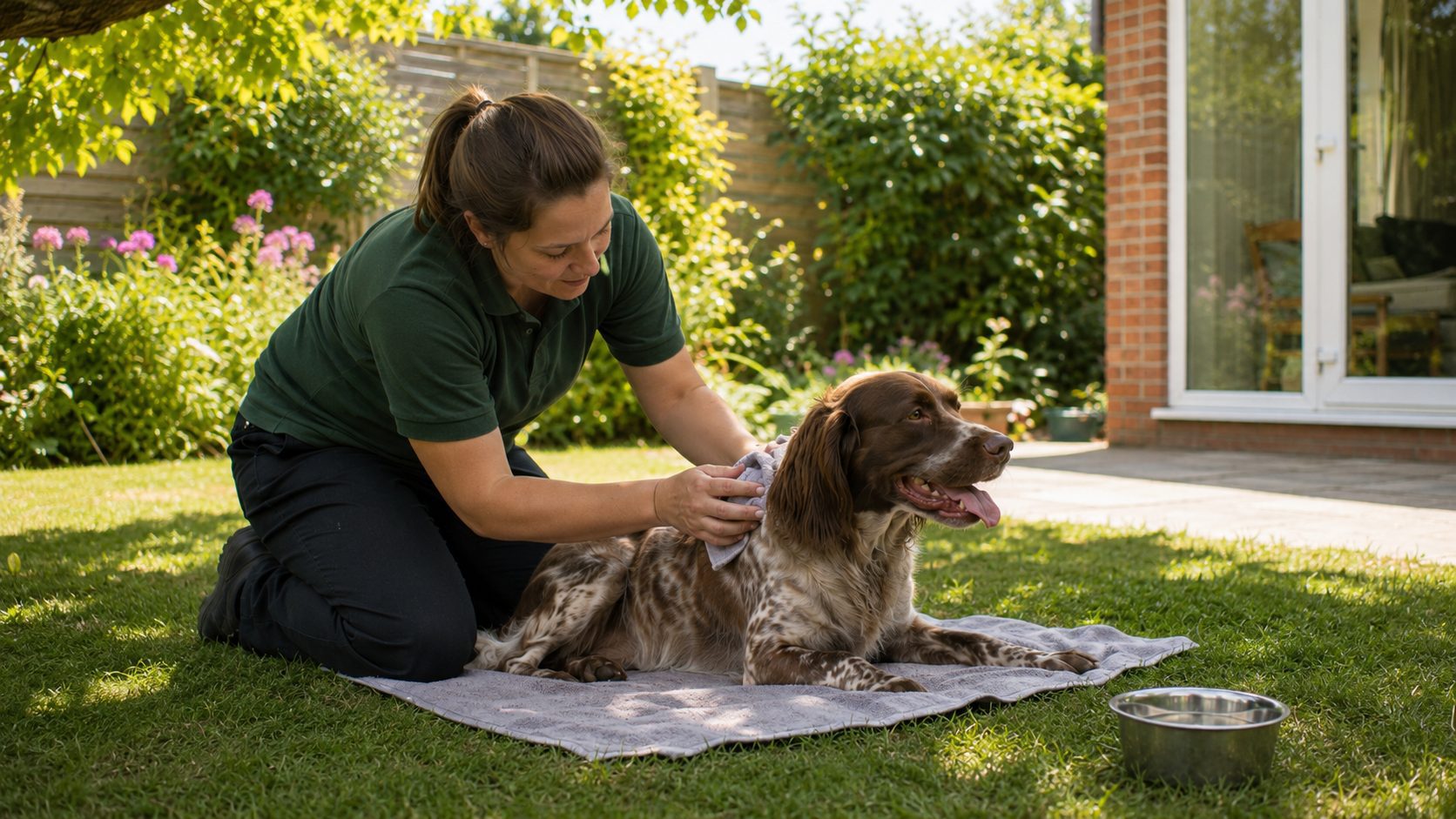
Do not cover the dog with damp towels. The RSPCA warns that placing damp towels directly over a dog’s body can trap heat and worsen their condition. Damp towels may be placed underneath the dog and re-wetted frequently, but not over the body.
What Not To Do
Team members must not:
- Continue the walk or booking as normal.
- Wait to see if the dog improves.
- Leave the dog in direct sun.
- Put the dog in a hot car.
- Cover the dog with damp towels.
- Give medication.
- Force the dog to drink.
- Delay veterinary advice.
- Treat heatstroke as minor.
Higher Risk Dogs
Some dogs are more at risk in warm weather.
Higher risk dogs may include:
- Flat-faced breeds
- Puppies
- Senior dogs
- Overweight dogs
- Dogs with thick coats
- Dogs with breathing problems
- Dogs with existing health conditions
The RSPCA notes that puppies, senior dogs, flat-faced breeds, dogs with thick coats and dogs with health conditions affecting breathing can be at greater risk of heatstroke.
Pad & Co Guidance
- Follow the Pad & Co heat policy.
- Stop activity if overheating is suspected.
- Move the dog to shade or a cool area.
- Begin safe cooling.
- Contact veterinary advice urgently.
- Contact Pad & Co management.
- Contact the client according to procedure.
- Complete the incident form.
- Do not continue a walk, garden visit or sitting activity as normal after heatstroke signs.
Key Points
- Heatstroke is an emergency.
- Stop activity immediately.
- Begin cooling straight away.
- Contact veterinary advice urgently.
- Do not wait to see if the dog improves.
- Do not cover the dog with damp towels.
- Some dogs are more vulnerable in warm weather.
- Pad & Co procedure must be followed if overheating or heatstroke is suspected.