Learning Outcome
By the end of this module, team members should understand how to recognise possible choking or breathing difficulties, how to respond safely, what actions must be avoided, when veterinary advice is needed, and when Pad & Co procedures and incident reporting must be followed.
Training Information
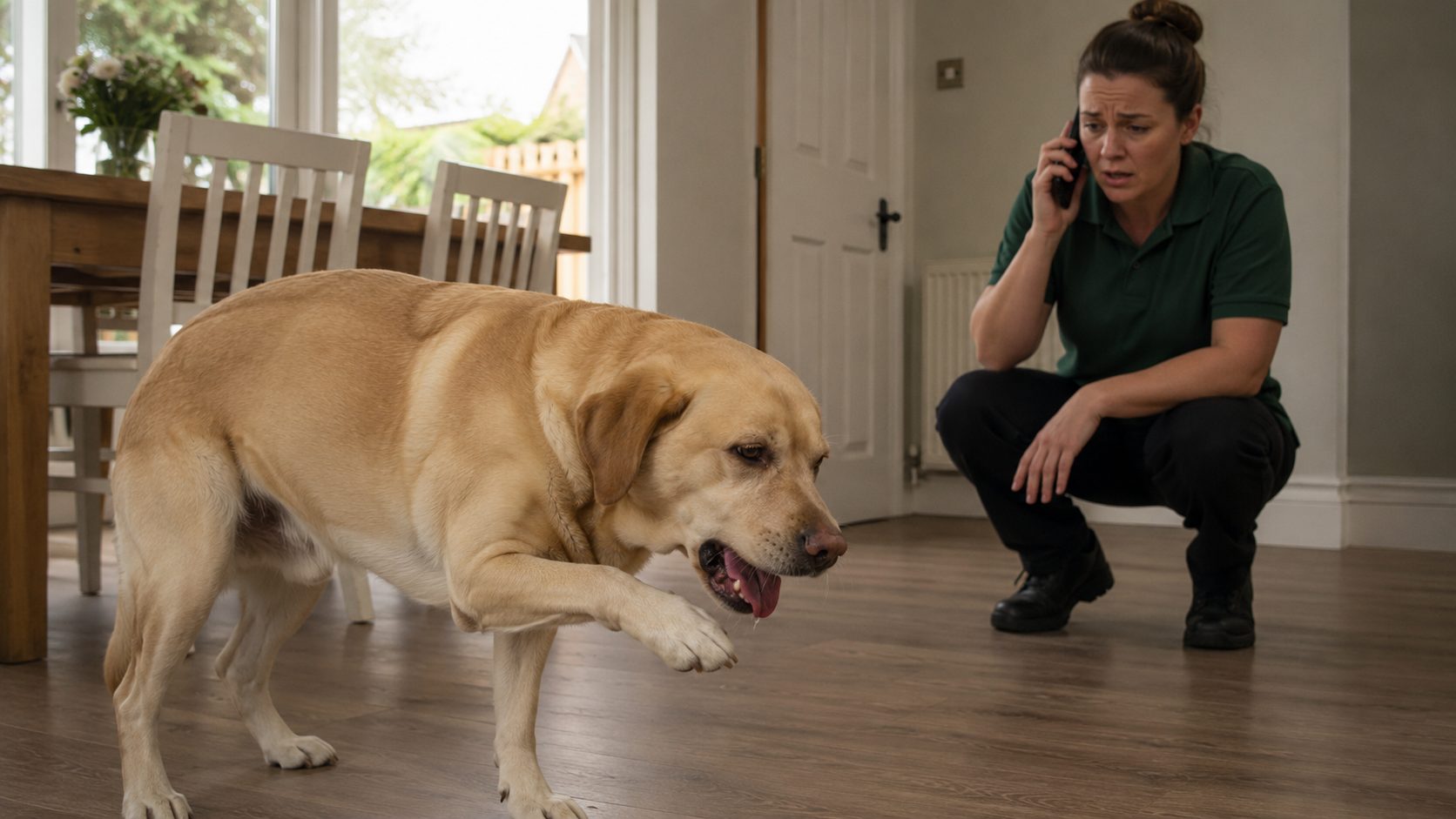
Choking and breathing problems should be treated as urgent.
A dog that is struggling to breathe may deteriorate quickly. Team members must act calmly, keep themselves safe, avoid unsafe handling, and contact veterinary advice immediately.
Possible signs of choking or breathing distress may include:
- Difficulty breathing
- Choking sounds
- Gagging or retching
- Pawing at the mouth
- Coughing repeatedly
- Panic or distress
- Blue, pale or abnormal gums or tongue
- Collapse
- Weakness
- Noisy or laboured breathing
If a dog is choking, there may be an object stuck in or around the mouth or throat. Only attempt to remove an object if it is clearly visible, safe and easy to remove. Care must be taken not to push the object further down or put the team member at risk of being bitten.
What To Do
If choking or breathing difficulty is suspected during a Pad & Co booking:
- Stop the activity immediately.
- Keep yourself safe.
- Keep the dog as calm as possible.
- Check for obvious danger from a safe position.
- Contact veterinary advice urgently.
- Only remove a visible object if it is safe and easy to do so.
- Avoid pushing anything further into the mouth or throat.
- Contact Pad & Co management.
- Contact the client according to procedure.
- Complete the incident form.
If An Object Is Visible
If an object is visible in the dog’s mouth:
- Only try to remove it if it is safe and easy to reach.
- Do not force fingers deep into the mouth.
- Do not push the object further down.
- Do not put yourself at serious bite risk.
- Stop and seek veterinary advice if unsure.
What Not To Do
Team members must not:
- Continue the walk or booking as normal.
- Delay veterinary contact.
- Force fingers deep into the dog’s mouth.
- Push an object further down the throat.
- Shake the dog.
- Give food or treats.
- Force water into the dog’s mouth.
- Put themselves at serious bite risk.
- Ignore blue, pale or abnormal gums.
- Treat breathing difficulty as minor.
Breathing Problems Without Choking
Not all breathing problems are caused by choking.
Breathing difficulty may also be linked to:
- Heatstroke
- Allergic reaction
- Injury
- Collapse
- Illness
- Airway obstruction
- Stress or panic
- Existing health conditions
If the dog is struggling to breathe, the cause does not need to be known before seeking help. Team members should describe what they can see and contact veterinary advice urgently.
Pad & Co Guidance
- Treat choking and breathing difficulty as urgent.
- Stop the activity immediately.
- Keep the dog calm and safe where possible.
- Avoid unsafe mouth handling.
- Contact veterinary advice urgently.
- Contact Pad & Co management.
- Contact the client according to procedure.
- Complete the incident form.
- Do not continue a booking as normal after choking or breathing difficulty.
Key Points
- Choking and breathing problems are urgent.
- Only remove a visible object if it is safe and easy to do so.
- Do not force fingers into the dog’s mouth.
- Do not give food, treats or forced water.
- Do not delay veterinary advice.
- Breathing difficulty may have several causes.
- Pad & Co procedure must be followed if choking or breathing difficulty is suspected.