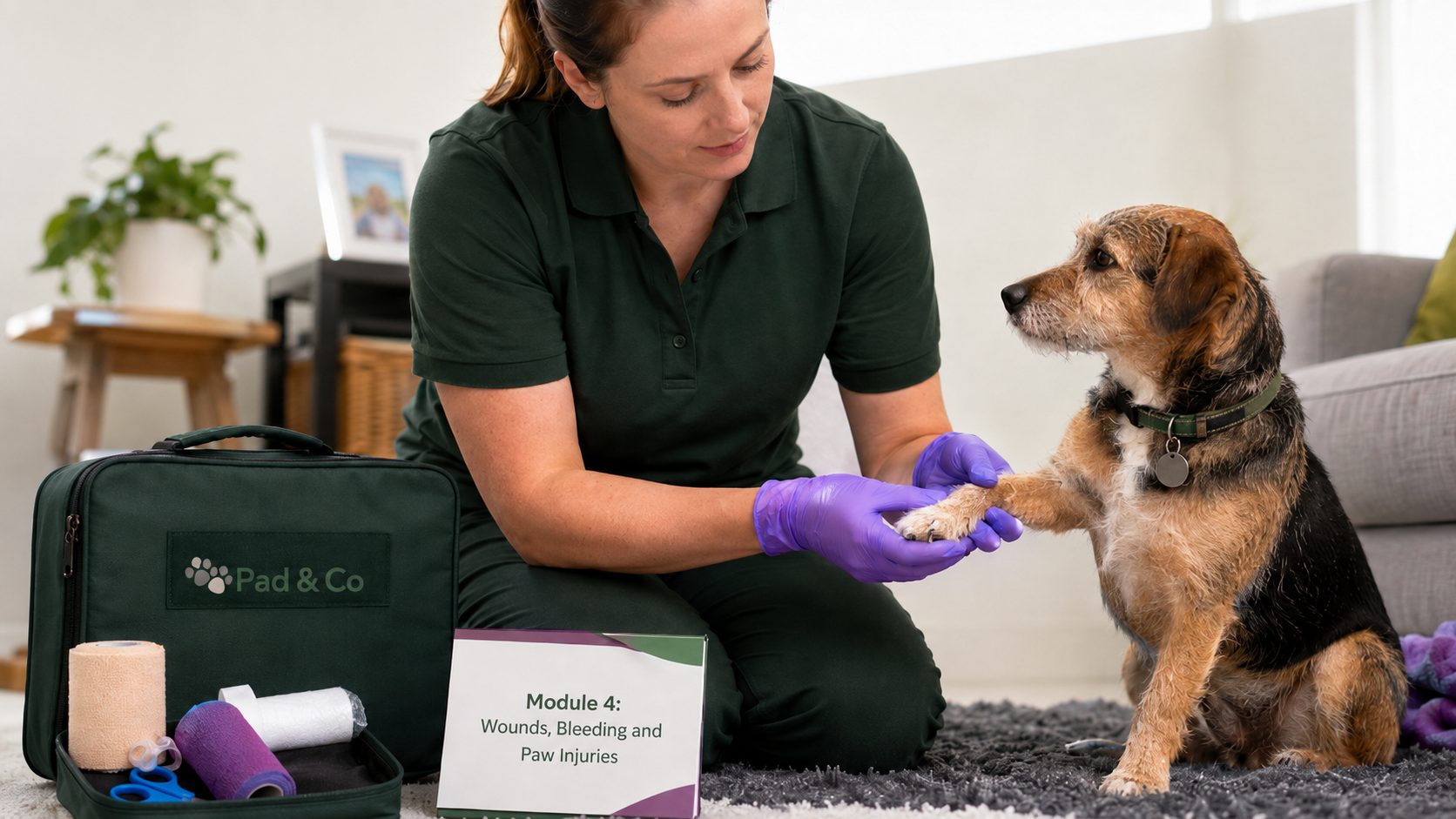
Learning Outcome
By the end of this module, team members should understand how to respond safely to cuts, bleeding, broken nails and paw injuries during a Pad & Co booking. Team members should know when to stop activity, how to keep the pet calm, what not to do, when veterinary advice may be needed, and when Pad & Co procedures and incident reporting must be followed.
Training Information
Cuts, grazes, broken nails and paw injuries can happen during walks, garden visits, home visits or sitting bookings.
Common signs may include:
- Limping
- Holding up a paw
- Licking or chewing at a paw
- Blood on the paw, fur, floor or bedding
- Broken or bleeding nail
- Torn paw pad
- Swelling
- Sensitivity when touched
- Sudden reluctance to walk
- Whining, shaking or guarding the area
If a dog shows signs of a wound, bleeding or paw injury, the activity should stop. The dog should be kept calm and prevented from making the injury worse.
Heavy bleeding, deep wounds, wounds from fights, suspected broken bones or injuries that are painful, dirty or not stopping should be treated as veterinary concerns. Blue Cross advises contacting a vet quickly for serious bleeding, wounds and emergencies, with first aid steps such as pressure or bandaging only acting as temporary support while veterinary help is arranged.
What To Do
If a wound, bleeding or paw injury is noticed during a Pad & Co booking:
- Stop the activity.
- Keep the dog calm.
- Move to a safe place if possible.
- Prevent further walking if the paw or leg is affected.
- Use gloves if checking the area.
- Contact Pad & Co management.
- Contact the client according to procedure.
- Seek veterinary advice where needed.
- Complete the incident form.
If there is bleeding, a clean dressing or gauze may be used for temporary support where safe and appropriate. If bleeding is heavy or does not stop, veterinary advice should be sought urgently.
What Not To Do
Team members must not:
- Continue the walk as normal if the dog is injured.
- Force the dog to walk on an injured paw.
- Let the dog lick or chew the wound if this can be prevented safely.
- Apply human creams, sprays, powders or household products.
- Give human medication or painkillers.
- Dig around inside a wound.
- Remove deeply embedded objects.
- Wrap bandages or vet wrap tightly.
- Treat heavy bleeding as minor.
- Delay veterinary advice if the wound is deep, dirty, painful or not stopping.
Bandages and vet wrap can cause problems if applied too tightly or left too long, so they should only be used as temporary support and not as a replacement for veterinary care.
Paw Injuries
Paw injuries can worsen quickly if the dog keeps walking.
Possible paw issues include:
- Torn pad
- Cut pad
- Broken nail
- Bleeding nail
- Thorn, glass or small object in the paw
- Burn or irritation from hot surfaces, grit, salt or chemicals
- Limping after rough ground or play
If the dog is limping, bleeding or reluctant to put weight on the paw, stop activity and follow Pad & Co procedure.
Do not pull out anything that is deeply embedded. Keep the dog calm and seek veterinary advice.
Broken or Bleeding Nails
A broken nail can be painful and may bleed.
Team members should:
- Stop activity.
- Keep the dog calm.
- Prevent licking where possible.
- Use clean gauze or dressing if needed.
- Seek advice if bleeding continues, the nail is badly damaged or the dog is in pain.
- Complete the incident form.
Quick stop powder may be useful for very small nail bleeds, but it should not be used as a solution for heavy bleeding, deep wounds or serious injuries.
Pad & Co Guidance
- Stop the activity if a wound, bleeding or paw injury is noticed.
- Keep the dog calm and safe.
- Do not continue the booking as normal if the dog is injured.
- Contact Pad & Co management.
- Contact the client according to procedure.
- Seek veterinary advice where needed.
- Complete the incident form if there is an injury, bleeding, paw concern or welfare concern.
Key Points
- Stop activity when an injury is noticed.
- Paw injuries can worsen if the dog keeps walking.
- Heavy bleeding, deep wounds and painful injuries need veterinary advice.
- Do not use human medication or human creams.
- Do not remove deeply embedded objects.
- Do not wrap bandages or vet wrap tightly.
- Any injury or welfare concern during a Pad & Co booking must follow Pad & Co procedure.