Learning Outcome
By the end of this module, team members should understand what pet first aid is, what their role is during an illness, injury or emergency, what actions must be avoided, and when Pad & Co procedures must be followed.
Training Information
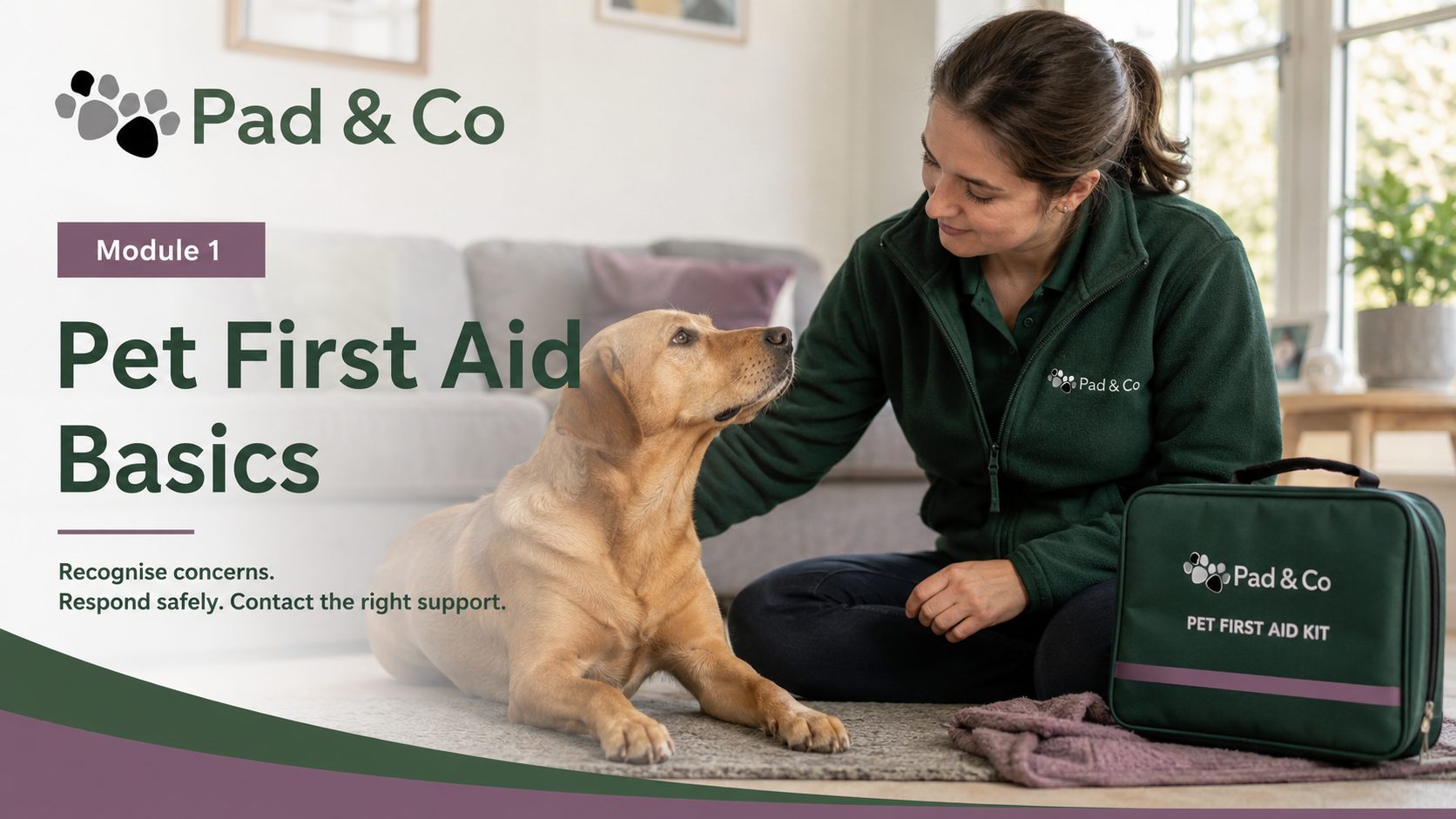
Pet first aid is temporary support given during an illness, injury or emergency until veterinary advice or treatment is available.
A Pad & Co team member’s role is to notice concerns, keep the pet safe where possible, contact the correct support, and complete accurate records.
Pet first aid does not replace veterinary treatment.
Team members must not diagnose a pet’s condition, prescribe treatment, give human medication, delay veterinary help, or attempt procedures outside their training.
If a pet becomes injured, unwell, distressed or there is any welfare concern during a Pad & Co booking, the team member must follow Pad & Co procedure.
What Team Members Should Do
If a pet first aid concern happens during a booking:
- Stop the activity if needed.
- Check the area is safe.
- Keep yourself safe.
- Keep the pet safe where possible.
- Contact veterinary advice if urgent or uncertain.
- Contact Pad & Co management.
- Contact the client according to procedure.
- Complete the incident form where required.
What Team Members Must Not Do
Team members must not:
- Diagnose the pet’s condition.
- Give human medication or painkillers.
- Use products they are unsure about.
- Delay veterinary advice in an urgent situation.
- Continue a booking as normal after a serious concern.
- Attempt procedures they are not trained or confident to perform.
- Put themselves, the pet, the public or other animals at unnecessary risk.
- Use home remedies.
- Make promises to the client that the pet is fine.
Describing, Not Diagnosing
Team members should describe what they can see rather than guessing what condition the pet has.
Use factual wording.
Better wording:
- “The dog is limping on the front left paw.”
- “There is bleeding from the paw.”
- “The dog is panting heavily and seems weak.”
- “The dog collapsed during the walk.”
- “The dog may have eaten something unsafe.”
Avoid wording such as:
- “Your dog has heatstroke.”
- “Your dog has poisoned itself.”
- “Your dog needs stitches.”
- “It is definitely a seizure.”
- “They are fine now.”
Diagnosis should come from a veterinary professional.
When To Seek Support
Team members should seek support if:
- The pet is injured.
- The pet is suddenly unwell.
- The pet collapses.
- There is heavy bleeding.
- The pet is struggling to breathe.
- Poisoning is suspected.
- Heatstroke is suspected.
- A seizure occurs.
- A road accident, fall or heavy impact happens.
- A bite or fight occurs.
- The team member is unsure what to do.
If unsure, team members should contact Pad & Co management and seek veterinary advice where needed.
Pad & Co Guidance
- Stay calm.
- Check the area is safe.
- Keep yourself safe.
- Keep the pet safe where possible.
- Contact veterinary advice if urgent or uncertain.
- Contact Pad & Co management.
- Contact the client according to procedure.
- Complete the incident form where required.
- Use factual language.
- Do not diagnose.
- Do not give medication unless specifically instructed by a veterinary professional.
Key Points
- Pet first aid is temporary support.
- It does not replace veterinary care.
- Team members should describe what they see, not diagnose.
- Human medication must not be given unless specifically instructed by a vet.
- Serious or uncertain situations should be escalated.
- Pad & Co procedure must be followed during any injury, illness, emergency or welfare concern.